

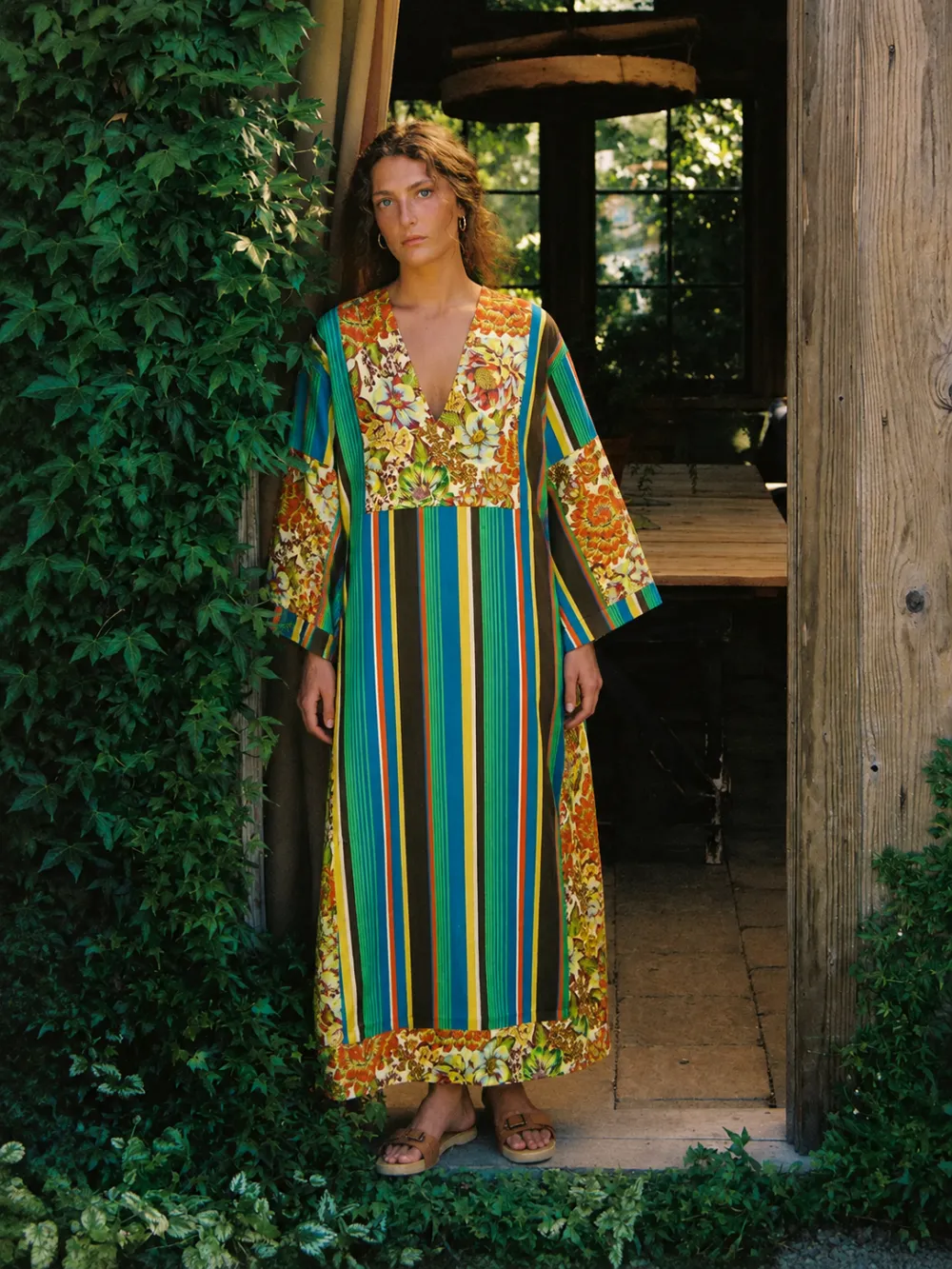
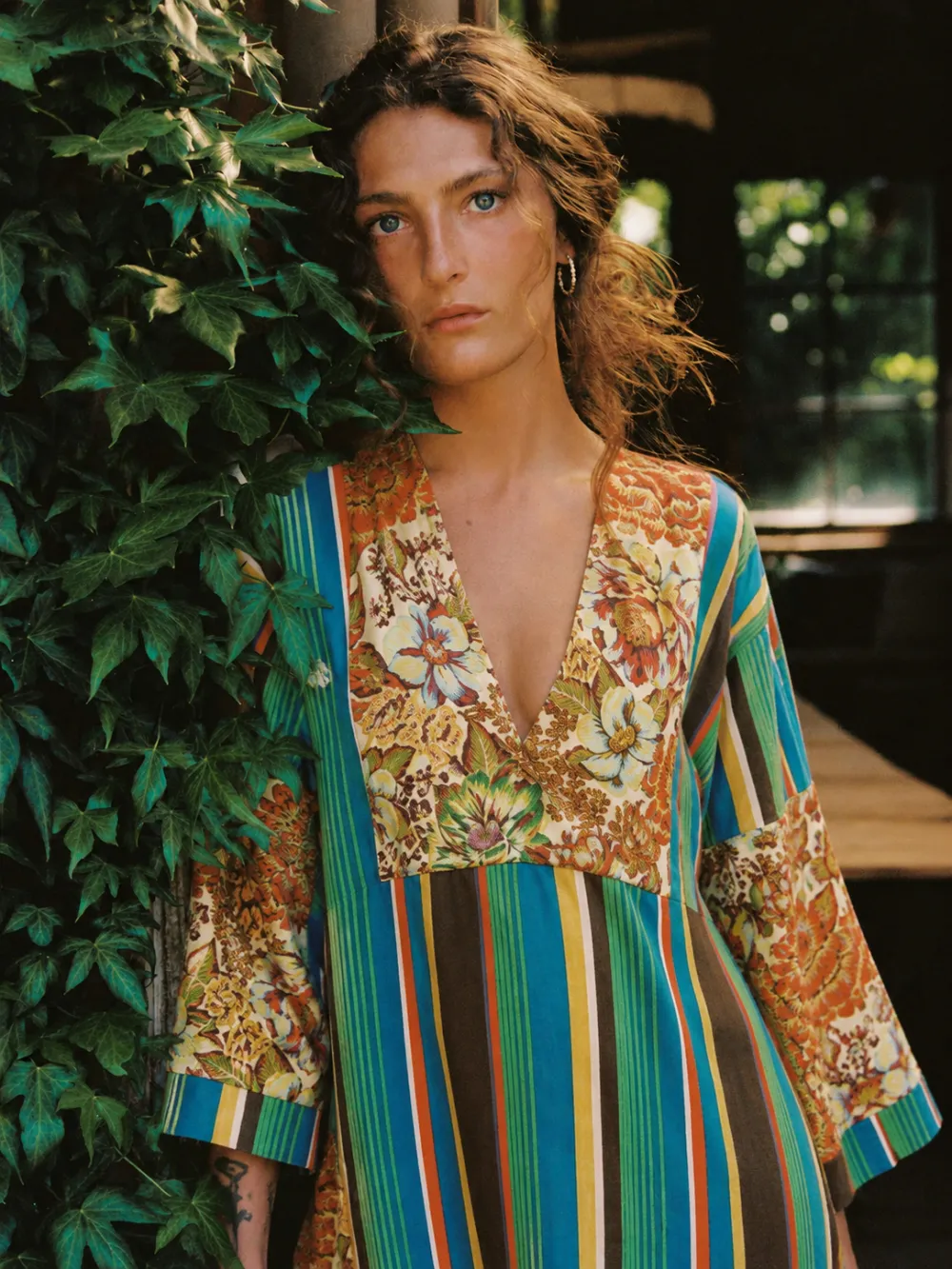
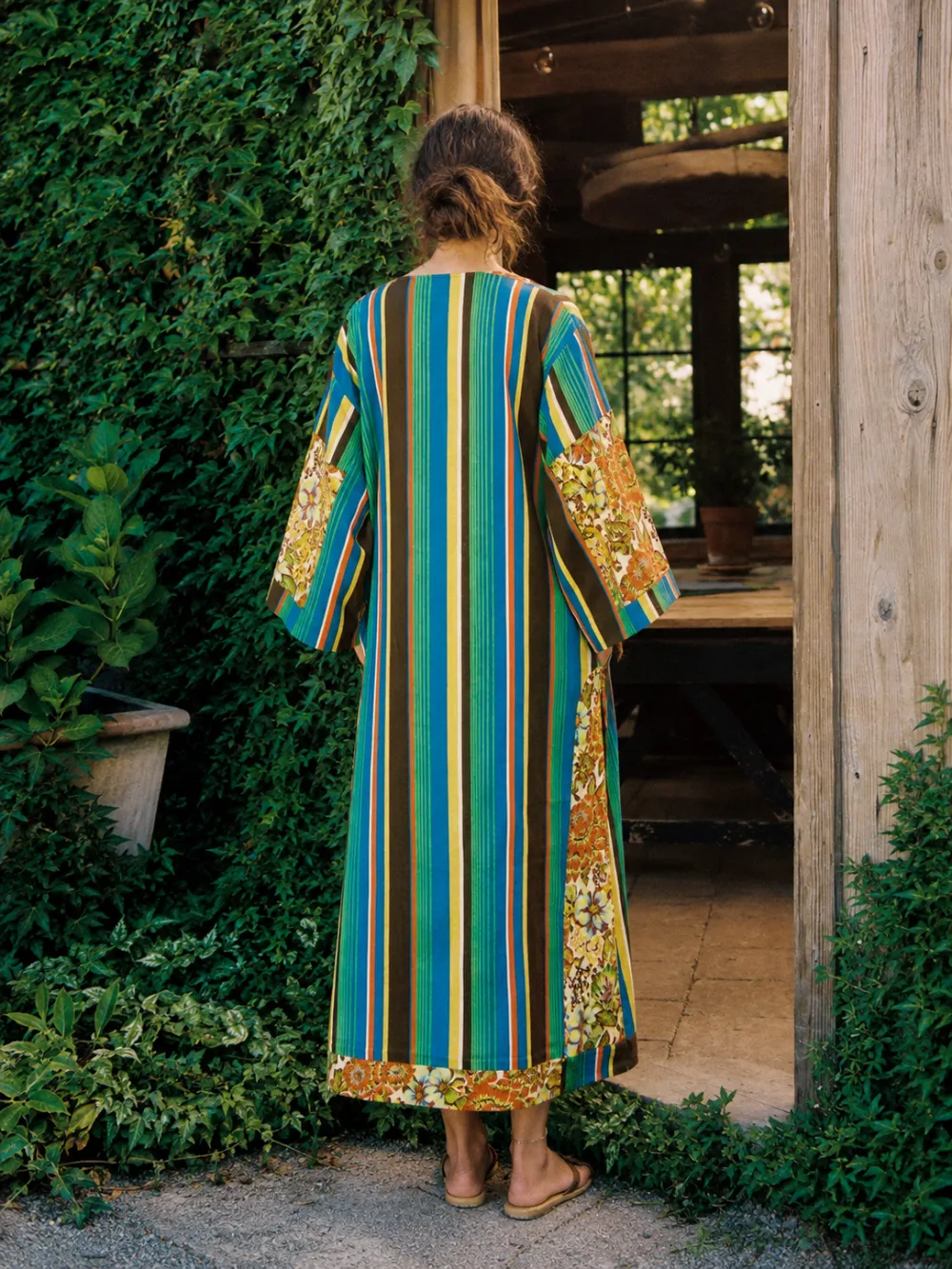
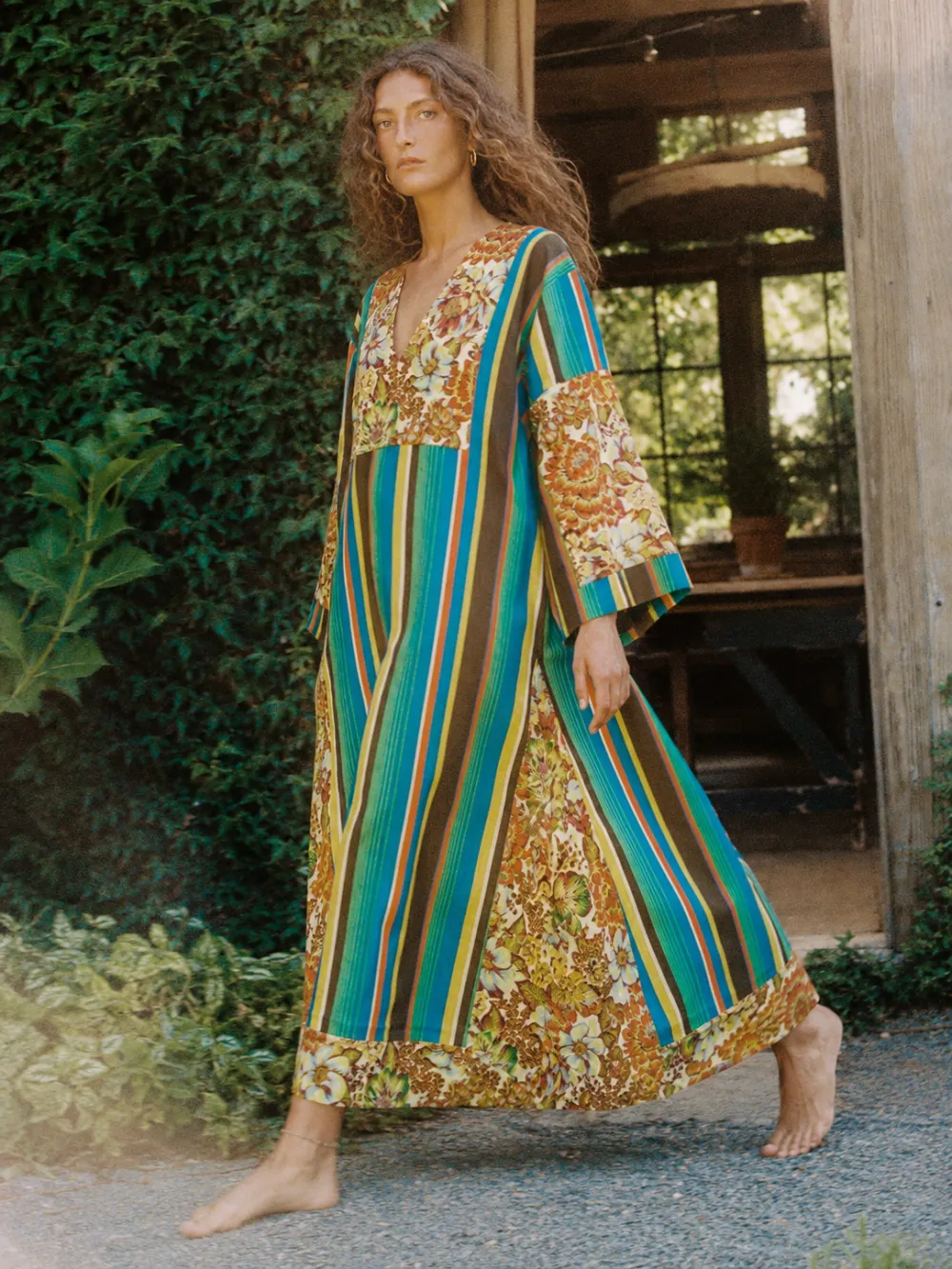
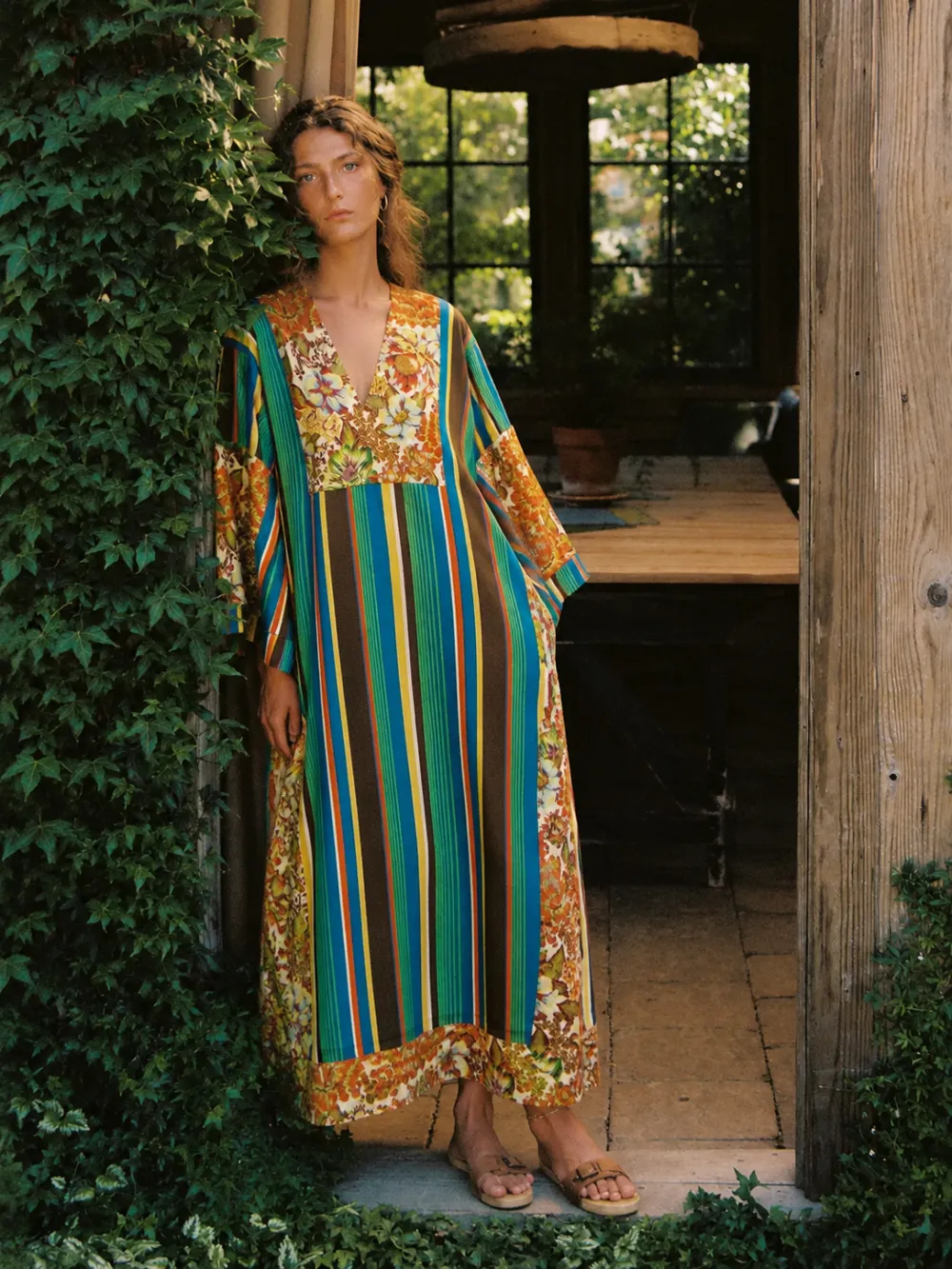
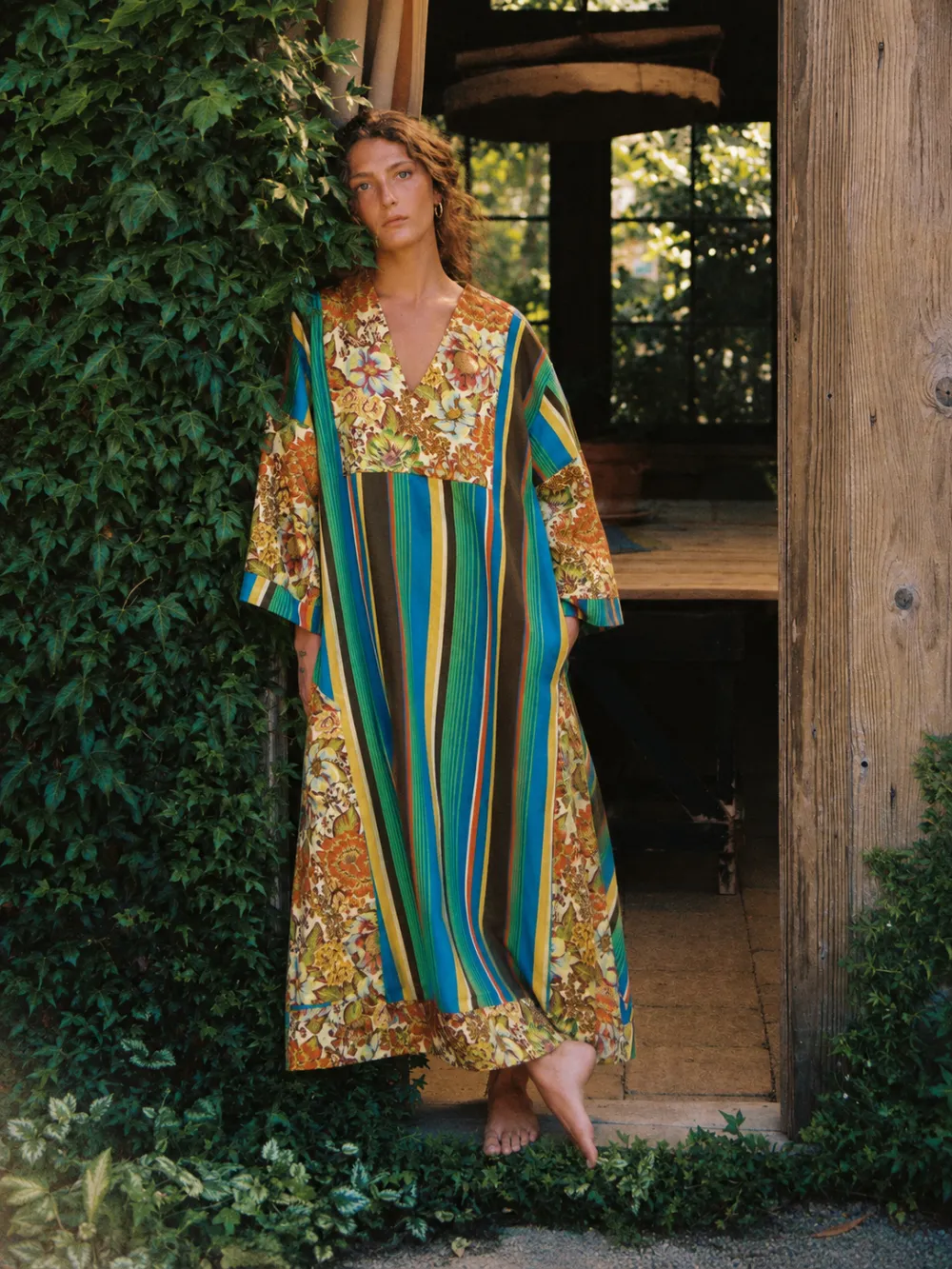

A column of awning stripe — chocolate, turquoise, green, marigold, orange —
framed top to bottom in a great seventies botanical: across the shoulders, down
the sleeves, along both sides, one last band at the hem.
Putting a stripe next to a floral is the oldest trick in the book, and it works
for exactly one reason: the colours have to talk to each other. Here they do.
Every shade in the floral is already somewhere in the stripe, so the eye reads
one designed thing rather than two fabrics that happened to meet. Framed panels,
not scraps. And this is the season for it — the spring runways were one long
argument for clashing on purpose.
Those panels do something quieter, too. They sit at the edges — shoulders,
sleeves, sides, hem — so nothing cuts across you. The stripe runs from the yoke
to the floor without a single interruption, which is about as long an unbroken
line as a dress can give you. It won't narrow you, whatever you've heard about
vertical stripes. What it does is give the eye somewhere to travel, all the way
down.
And it doesn't cinch. It falls straight from the shoulder and keeps falling, in
hemp and linen together — breathable, and softer every time you wash it. Run a
belt round your natural waist if you want a shape, or leave it and take the room
instead.
A shoe with some weight to it, a basket, and the good part of the afternoon.
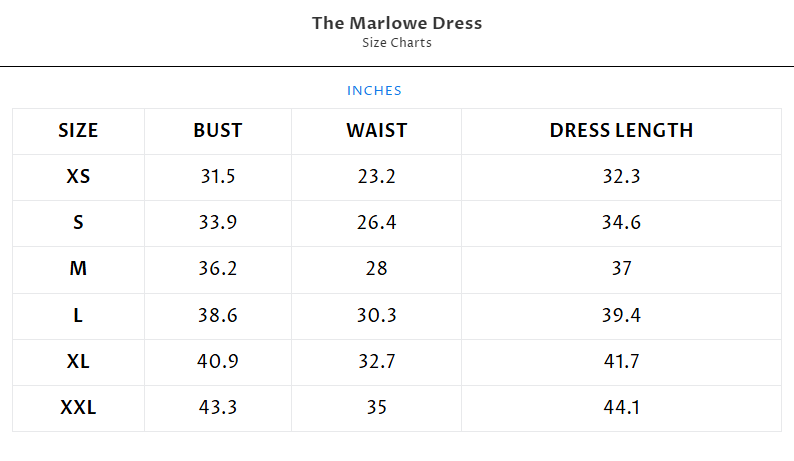
Hemp-linen blend · split V neckline · long wide sleeves · loose kaftan cut with no waist seam · floor length · panelled construction — striped body with contrast floral panels at the yoke, upper sleeves, sides and hem · relaxed and unfitted throughout — it creates space rather than defining a waist; add a belt at the natural waist if you want shape · densely printed throughout, so the pattern does real covering work · take your usual size; the cut is generous by design · model is 5'7" and wears a size M · in Riviera Stripe · machine wash cold, gentle cycle, hang to dry, warm iron while damp — and no fabric softener
Comment